
Les Nomades
Objects in motion.

It’s snowing in Boston.
They de-ice our plane three separate times. My ears are already clogged, my AirPods are broken, and I’m white-knuckling the armrest thinking about Connor, who once told me that taking off means getting comfortable with accepting death.
I am not there yet.
John planned a 13-mile walking tour of Lisbon on day one.
He texted me fifteen times the night before. Custom maps. Landmarks in sequential order. A tier system of must-dos and greenlits. The architecture of a man who cannot stop moving.
That’s the thing about John. If you had to describe him in one word, it’s inertia. An object in motion stays in motion. I am not an equal and opposite reaction; I’m more of a friction coefficient. But when he FaceTimed me before Thanksgiving to say flights and hotels were cheap and we had to go, I said yes. He’d been working on it for months. A 24-hour layover in Lisbon going in, a week in Morocco, another 24 hours in Lisbon on the way back. The whole thing was his passion project. I showed up.
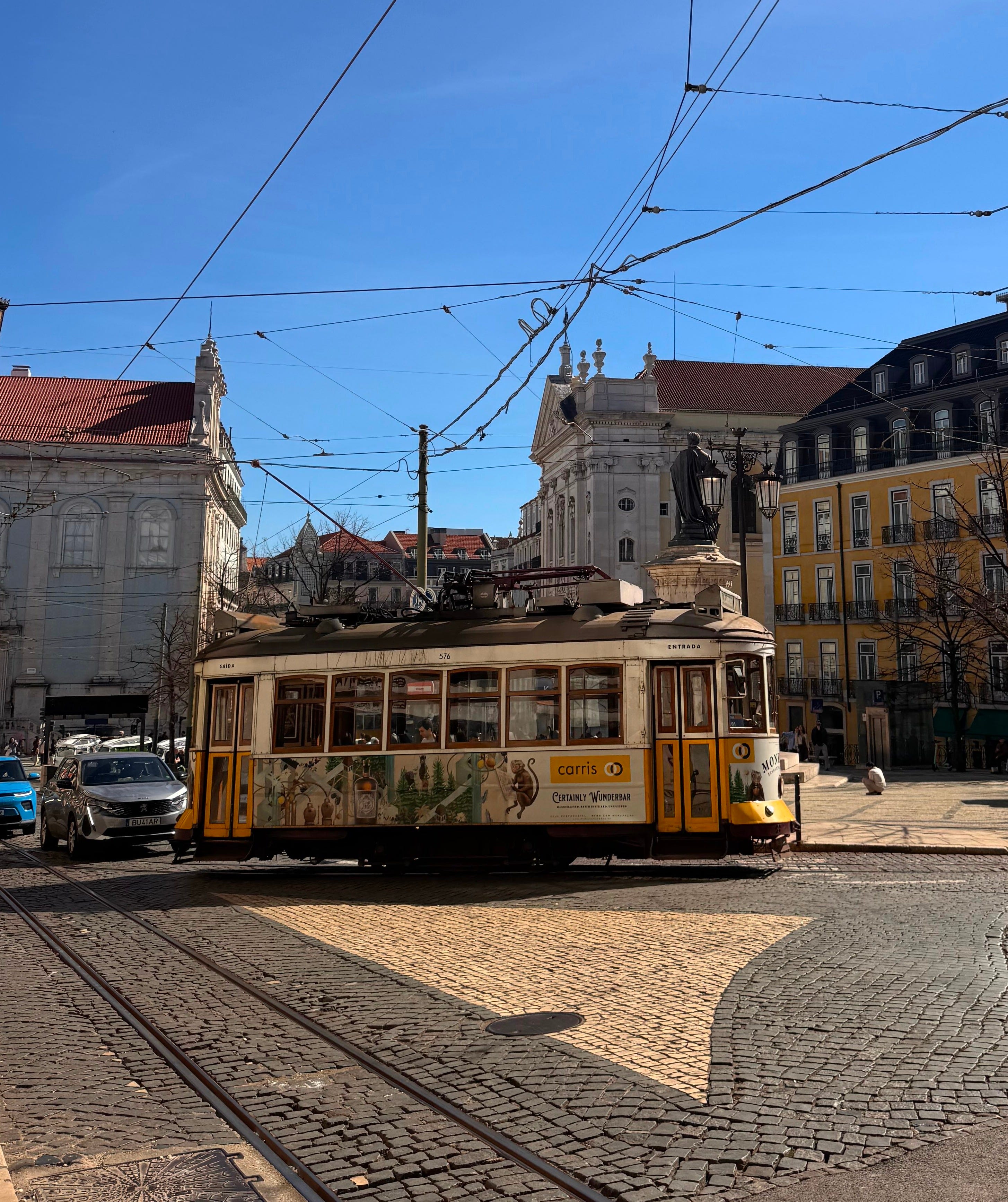
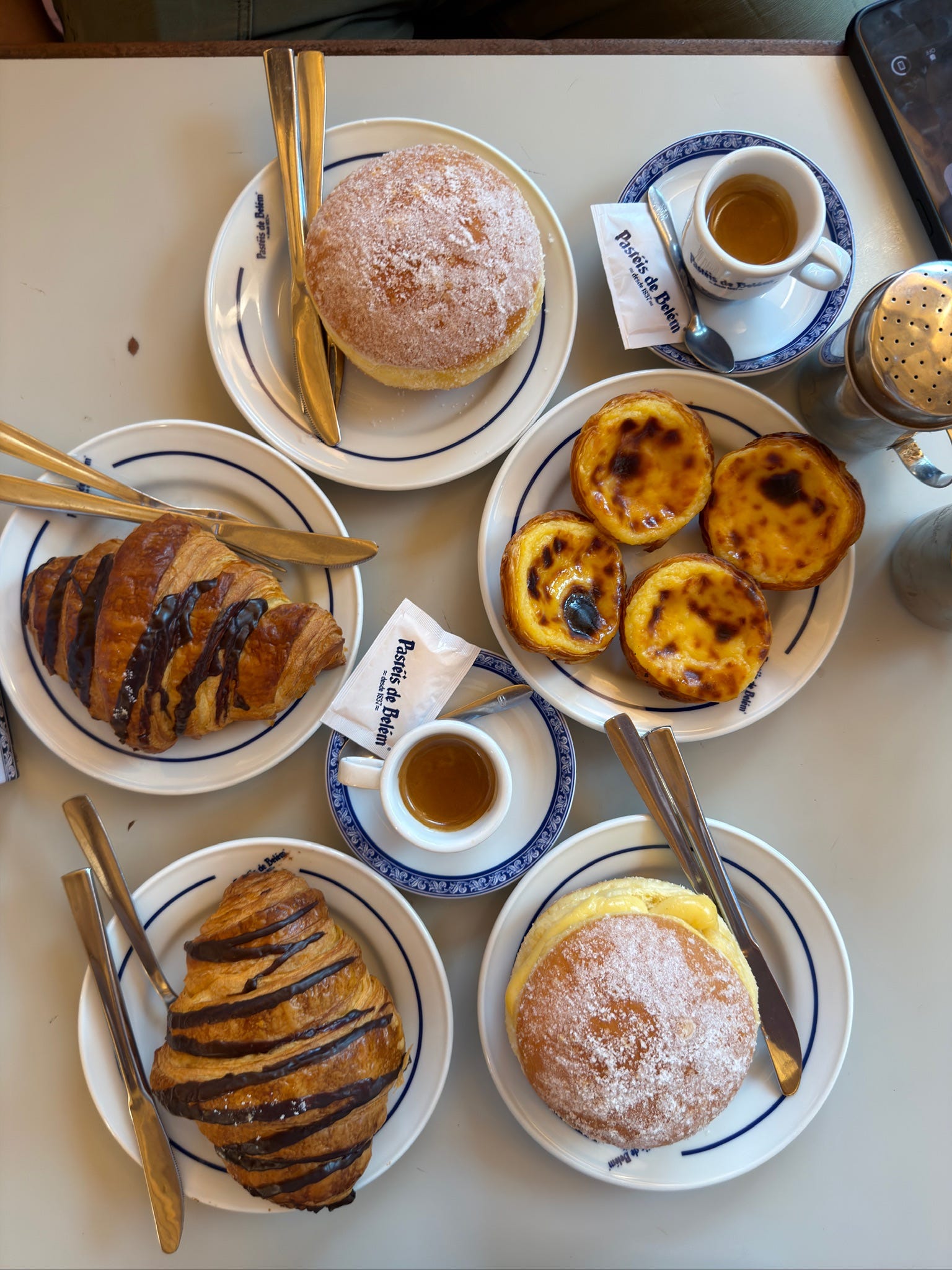
No vinho verde on day one, but there was ginjinha, taken standing up in a tiny shop the way you’re supposed to, and pastéis de nata at Pastéis de Belém: four on a plate, still warm, charred on top and custardy all the way through. Two espressos. A chocolate croissant neither of us needed but both of us ate. A mega donut with powdered sugar.
That night, dinner at Arca. If I ever open a restaurant — and I think about this an unhealthy amount — I want it to look and feel something like this. Twenty seats, maybe. Every decision made with intention: the lighting, the wine list, the way the staff talks about what’s on the menu. Not precious about it. Just genuinely knowledgeable and happy to share. The menu is a single page, stamped ARCA in red, with a handwritten specials card clipped to it.
We started with the beef tartare with smoked eggplant and barley-wheat bread with goat’s milk butter and marmite, which sounds like a dare and is actually perfect. All that umami funk against the nuttiness of the grain. I got the piri piri chicken with tzatziki and fermented tomatoes. Sipping a local pét-nat, fizzy and funky, the exact right thing. Every dish was doing something. Nothing was there to fill a void.
I’m fortunate to have eaten at many restaurants so far. I can count on one hand the ones where I’ve walked out thinking that’s what a restaurant should be.
Then a last-second trip to a Benfica game. Beautiful night, beautiful footy, comfortable win.
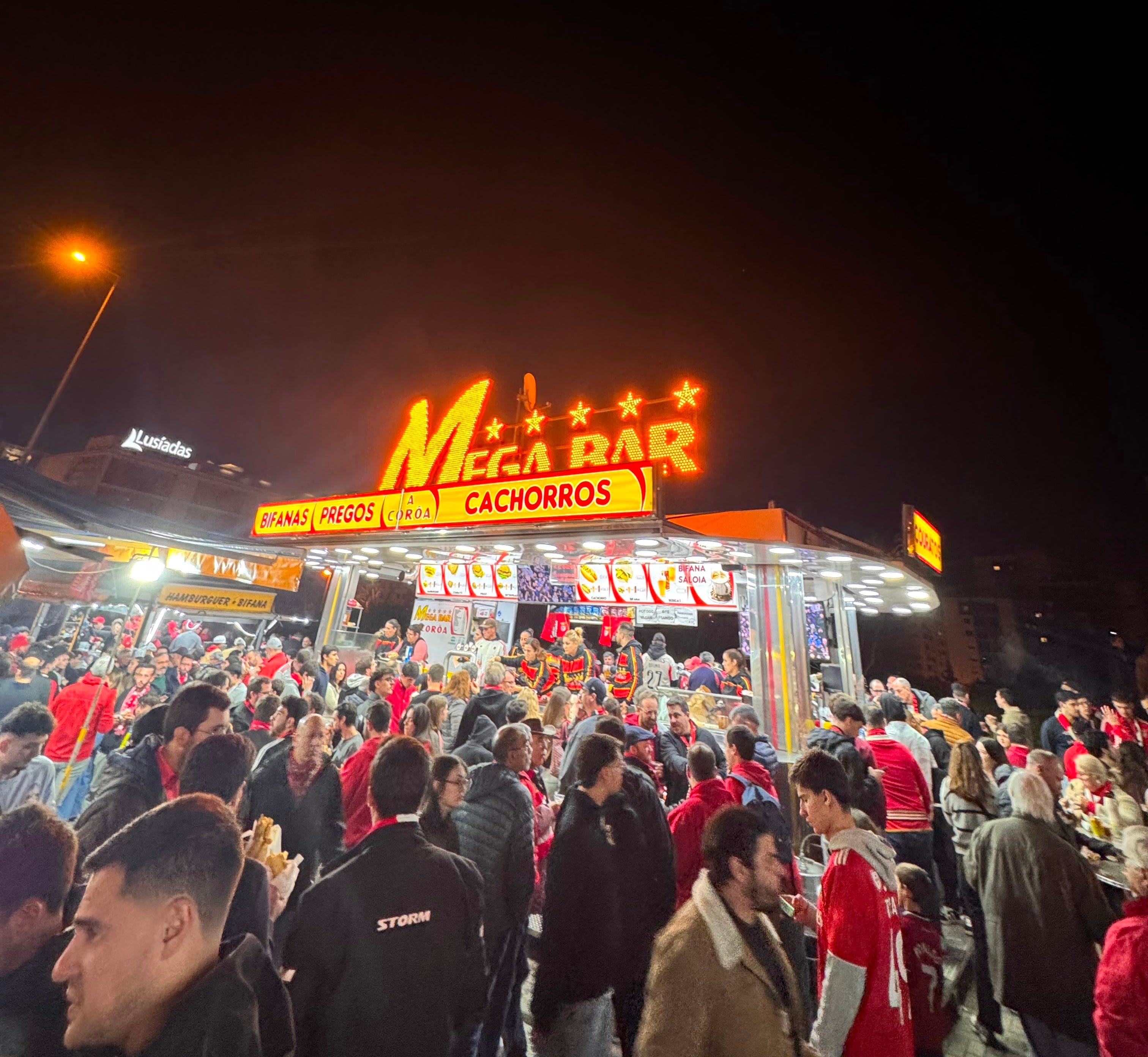
The fun didn’t start until the final whistle. 56,000 people pouring out of the stadium under highway overpasses and past riot police into a street marketplace that smelled like beer and cigarette smoke and something alive. Young and old, rich and poor. People just being. Big open air, cacophony of sound, a chill in the night air. Bifanas and cachorros from a dozen stands glowing yellow and red in the dark.
The most observant I’d felt in a long while. Just standing in the middle of something and letting it happen.
We couldn’t stay long. Early flight to Marrakech.
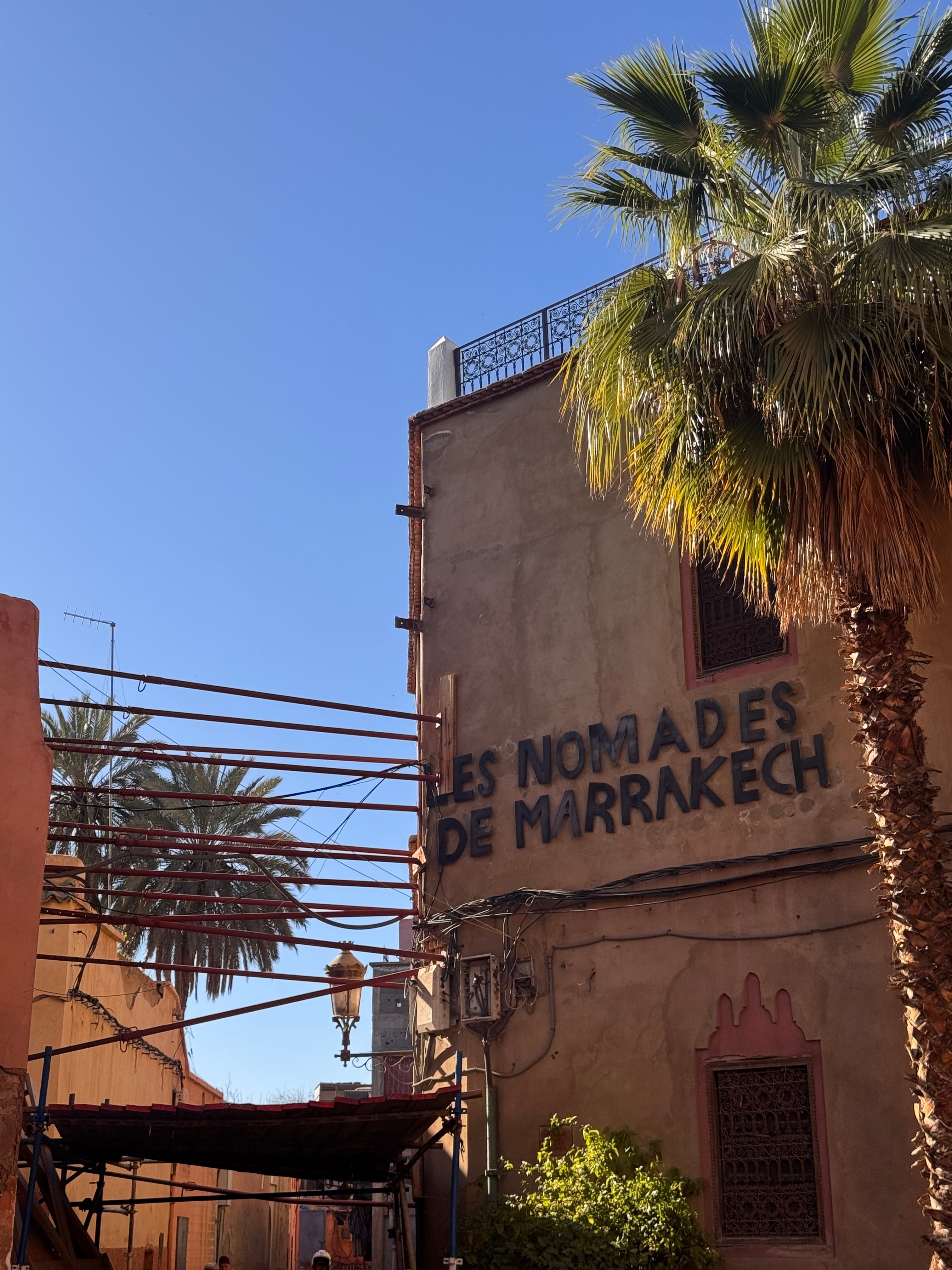
We’ve been in Marrakech for fifteen minutes.
Guards with machine guns on the tarmac. Customs interrogated me about my job. John is haggling with cab drivers over the phone while pooping in the baggage claim bathroom.
Before I say anything else about Morocco, some context I didn’t have going in and think I needed:
Morocco is a collision that never fully resolved. Berber civilizations going back thousands of years. Arab conquest in the 7th century that brought Islam and reshaped everything. Waves of Andalusian refugees after the fall of Muslim Spain, carrying with them architecture and cuisine and a cosmopolitan sophistication still visible in the medinas today. Then the French and Spanish protectorates in the early 20th century. A colonial carve-up that grafted Haussmannian boulevards onto ancient medina walls, a class structure mapped onto proximity to European influence, and an independence movement finally won in 1956.
What you feel on the ground is the unresolved tension of a country rapidly modernizing outside its medieval walls. Its soccer team bears the weight of 30 million souls on their shoulders on the outside, while inside, it’s dirtbikes hauling trash through passageways barely wide enough for one person, camel heads hanging in market stalls, stray cats eating entrails, elderly women begging, and blind men with their hands on the walls guiding themselves through a city they’ve memorized by touch.
Not all travel is supposed to be pretty.
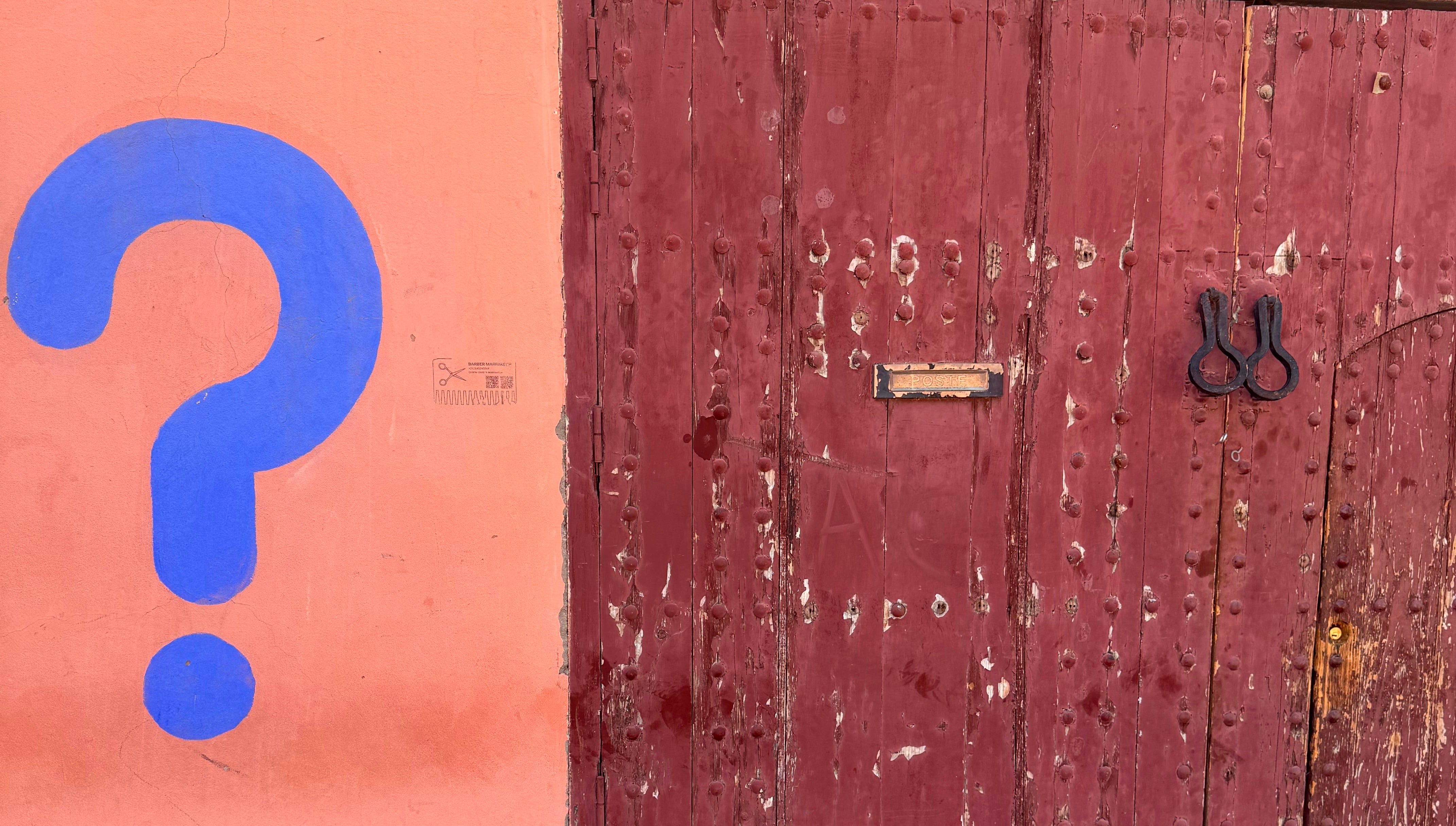
Did I mention it’s Ramadan?
The calls to prayer are beyond special. Five times a day, the whole city changes frequency. There’s a weight to it, and a stillness underneath.
On the first night, John eats street meat from the market the moment everyone breaks fast. Merguez, a spiced lamb sausage, deep red with harissa and cumin, that had been sitting out unrefrigerated before the guy cooked it.
Spoiler: John has GI problems for the rest of the trip.
The second morning, while John goes out to explore, I sit in the courtyard of our riad and write.
All white. You can hear birds, a fountain, and every few hours, the call to prayer.
I write: how the fuck did we end up here?
I don’t answer it. I just sit with it.
Then we go into the desert.
The Agafay isn’t the Sahara. It’s rocky. Sparse. The snow-capped Atlas Mountains await you on the horizon, and a lush green valley drops away beneath them while you’re standing in a completely different biome all at once. Three landscapes in a single frame.
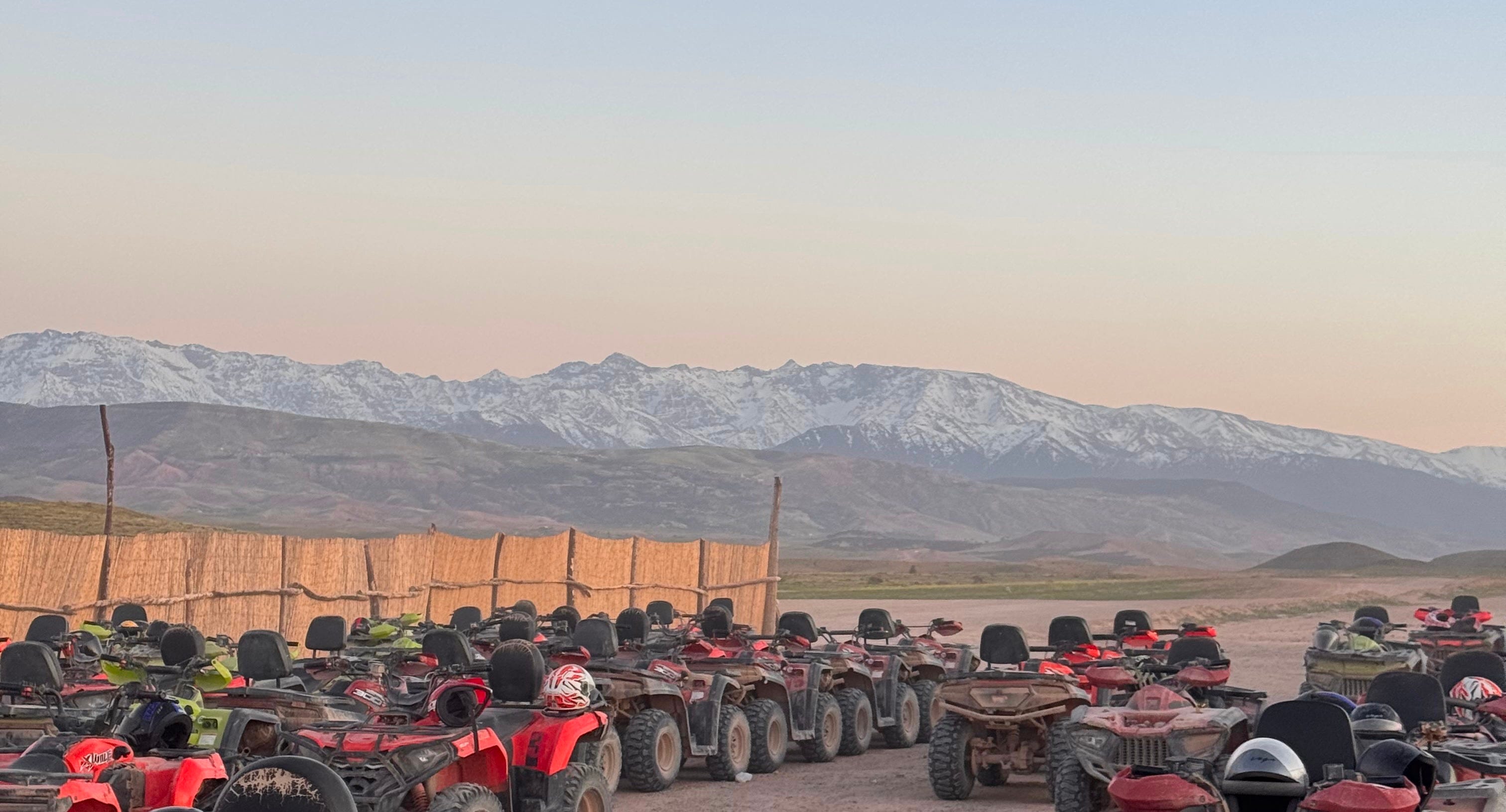
Our guide Tarik takes us out at sunset and I go full throttle, sand whipping around my face, blocked by a keffiyeh. We get horizontal on a drift. Briefly airborne on some jumps. The adrenaline is the best thing I’ve felt in months.
Day three: a masseuse in the medina tells me my back is the most stressed she’s encountered in any of her clients. I laugh it off. Then the Jardin Majorelle, which deserves more than a throwaway line.
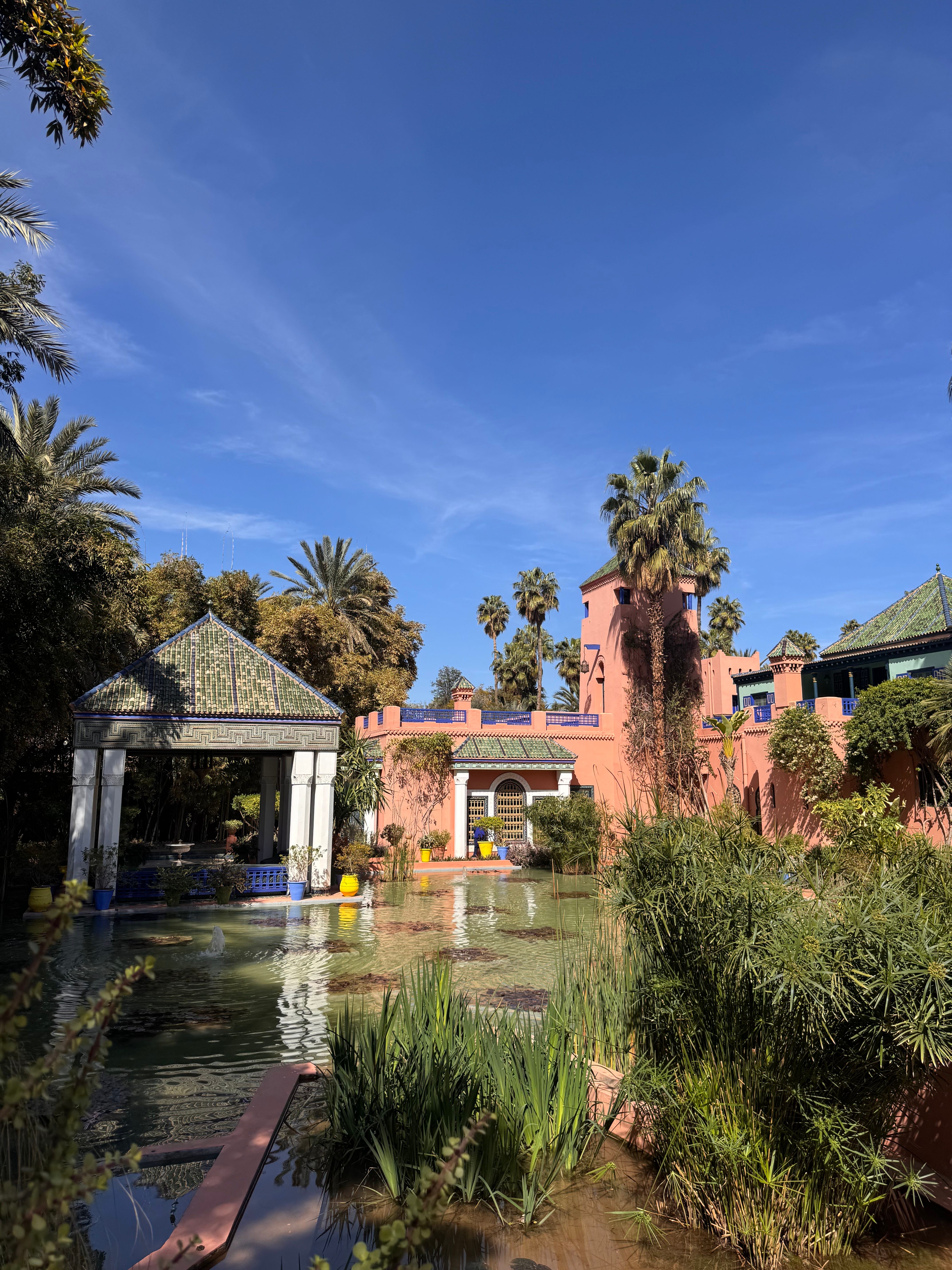
Yves Saint Laurent first visited Marrakech in 1966 and it broke him open.
He and Pierre Bergé eventually bought the Majorelle Garden, originally built by French painter Jacques Majorelle in the 1920s, named for the cobalt blue he used obsessively on every surface, and saved it from a hotel developer who would have demolished it. After YSL’s death, his ashes were scattered there.
The man understood that clothing could carry the weight of a culture. His Moroccan collections made explicit that fashion is anthropology. That the way a society dresses is the way it talks to itself, and sometimes to everyone else. Standing in that garden, cobalt walls against bougainvillea and cactus and a Marrakech afternoon, you understand why this place got to him. Some places do that to certain people.
At dinner that night at Le Foundouk, a beautifully restored riad in the medina, a stray cat adopts our table. We start with hummus topped with braised short rib. Obscene in the best way, the richness of the beef against the earthiness of the chickpeas, pulled together by something bright underneath. Preserved lemon, maybe? I ordered the couscous royal, chicken and lamb, slow-cooked. The couscous impossibly light.
A very good night.
The train to Fes takes eight hours. Casablanca, Rabat, Meknes along the way.
Somewhere in the middle of the route, the train stops for iftar: the breaking of the fast. People produce dates and water and small sweets from bags and pockets and pass them around without ceremony, the way you pass the bread at a table you’ve been sitting at your whole life. I’m not Muslim. I wasn’t fasting. A date was handed to me anyway.
Some gestures aren’t for insiders only.
Isham takes us around the Fes medina the next morning. The world’s largest urban area without cars. More labyrinthine than Marrakech, which I didn’t think was possible. Medieval streets essentially unchanged since the 9th century, when the city was founded at the intersection of two Berber kingdoms. The Qarawiyyin, established here in 859 and built by women, is often cited as the oldest continuously operating university in the world. The tanneries date to the 11th century and still operate the same way. Workers stand knee-deep in vats of pigeon shit, which softens the hides, before dyeing them in the jewel-toned honeycomb of vats you’ve seen on every Morocco travel reel.
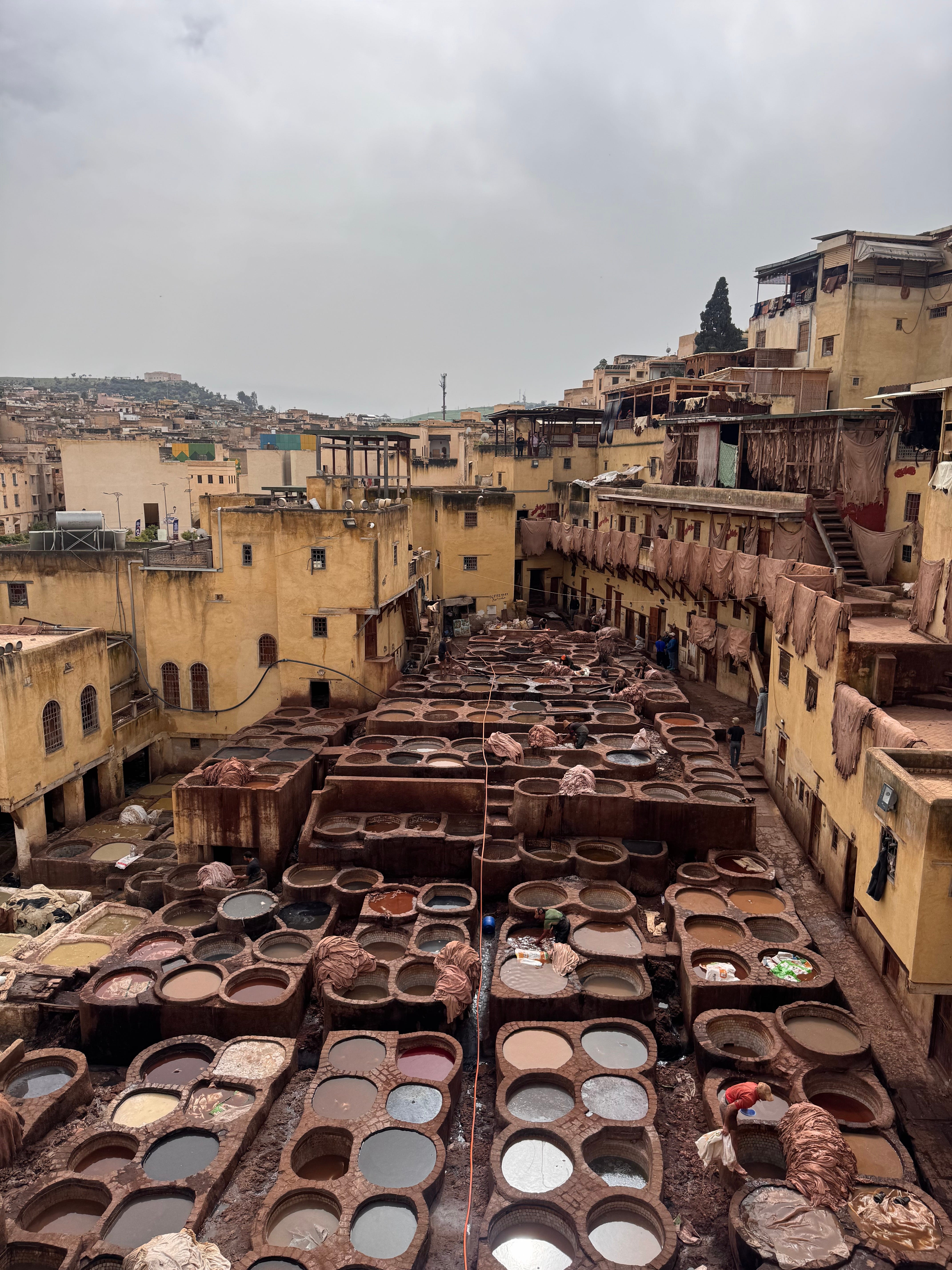
They hand you bundles of fresh mint to hold under your nose so you don’t throw up.
My favorite moment of the whole trip happens on an otherwise unassuming block, when Isham stops mid-tour and climbs a steep, narrow set of stairs to “check something out.” He comes back after a minute and waves us up.
At the top, a tiny room, an elderly man, seven varieties of mint, and massive copper pots boiling on the stove. Pictures of the royal family on the walls. Plastic chairs. The tea is the best I’ve ever had, sweet and powerful and hot, served in a glass, offered to two strangers who wandered up his stairs with no obligation and complete grace.
That’s it. That’s the whole thing. That’s what I came for.
That night, dinner at Gayza. The Michelin-keyed hotel restaurant was understated in exactly the right way. They bring an assortment of dips to start. One is a pumpkin purée with bergamot or orange blossom water, almond flakes on top. The best dip I have ever eaten. Sweet, rich, floral, powerful. I don’t know what it’s called. I’m going to spend the rest of my life trying to recreate it. The lamb mhammar comes with an onion compote and caramelized carrots, and it’s gone before I could fully process what I just experienced.
Back in Marrakech, John discovers he’s on a different flight to Lisbon than me.
He tries to fix it at the airport. Goes scorched earth on the staff and TAP Air customer service. Eventually pays extra to get on my flight, not realizing that buying a new ticket makes him a no-show on the original leg and therefore ineligible to fly home to New York the next day.
We sit in the Lisbon airport Burger King for two hours while he schemes. I get him a crown. It doesn’t help. TAP says they’ll call him back in an hour. He misses the call because he’s in the shower.
I find Bico Bar and befriend the bartender. He walks me through a soalheiro terramater vinho verde first. Precise and bright, it’s everything you want from the verde. Then a volcanic rosé from the Azores. Then an Aprate Ambar orange wine, which stopped me cold. The bartender tells me the owner was a restaurateur who gave it all up to grow wine, and the Ambar went on to win best orange wine in Europe, or something close to it. I don’t know how apocryphal the story is. I just know that shit was good.
John shows up and orders an IPA. I have too much respect for him to say anything.
At Adega Etelvina, with its six seats, warm light, the guy behind the counter quizzes us like he’s trying to place a scent. What do you usually drink? What did you have tonight? What mood are you in right now? He asks enough questions that by the time he pours, it’s not really a guess anymore. It’s the kind of place that exists because one person loves wine too much to do anything else.
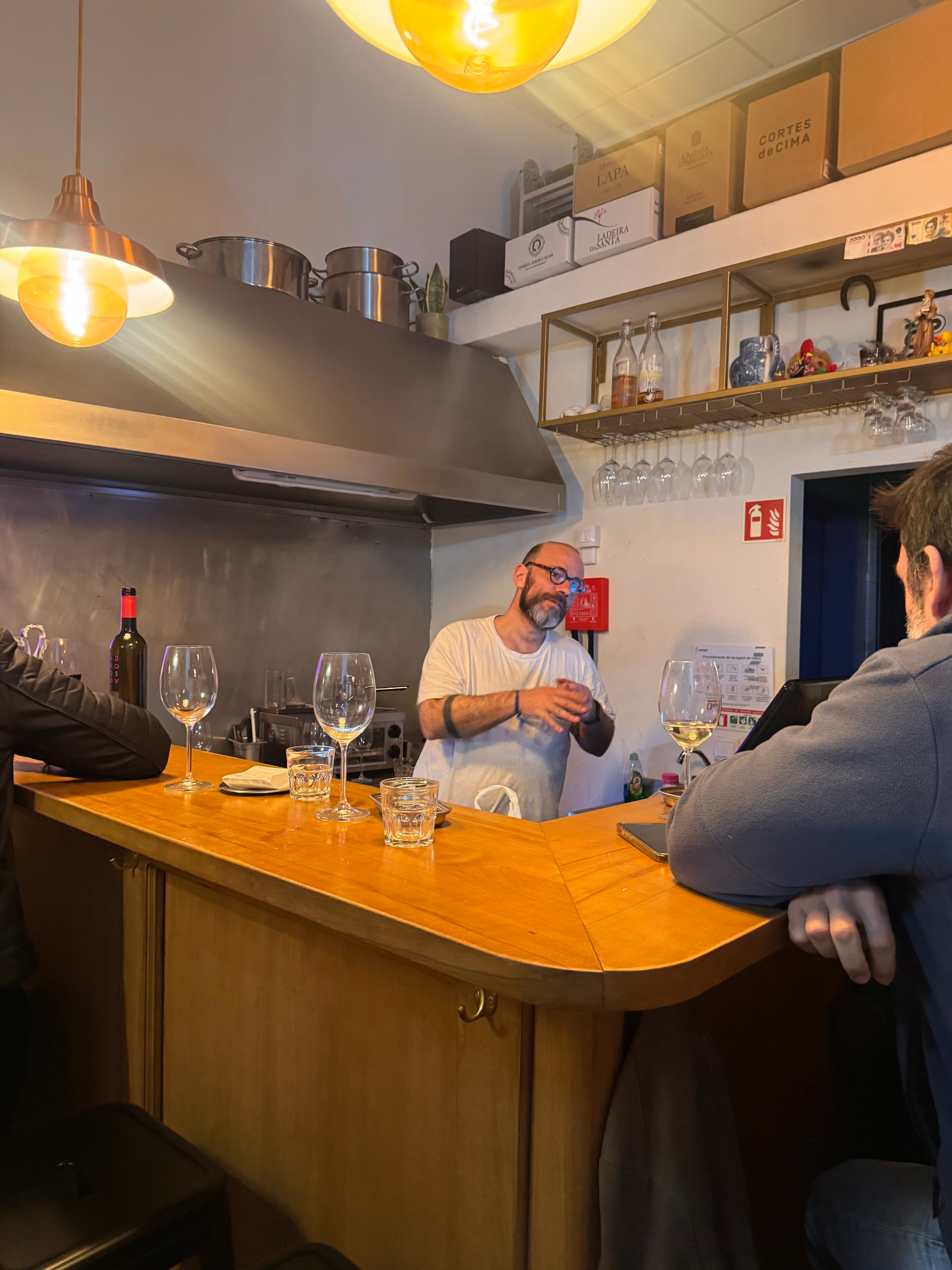
John steps outside to continue the TAP call. Three hours, start to finish. I drink wine. He handles logistics. This, it turns out, is the correct allocation of labor for both of us.
We pivot to Jam Club, somewhere up in Bairro Alto, for dinner. We leave full and a little loose.
Then an Irish pub named Cheers, because of course. Der Klassiker on the TVs, an international crowd that somehow felt like the whole trip compressed into one room. American college kids, a Scottish war vet itching to go back to the Middle East, a Brazilian film student, a group of Irishmen stacking things on their passed-out mate’s head. Chaotic. Funny. A little ugly. Genuinely alive.
Would I go back to Marrakech?
Maybe not. But Lisbon, yes. And Fes, absolutely. More of those stairs you aren’t supposed to climb. More of what’s at the top.
I spent the whole trip as a willing passenger. John’s maps. John’s itineraries. John’s optimized routing of a country I would have wandered through on my own over three weeks and never left. I didn’t have a single goal going in except to eat well and see what happened.
On the plane home, ears clogged, AirPods still broken, I finally answered the question I wrote in the riad courtyard. How the fuck did we end up here?
Six years ago, two strangers got randomly assigned as college orientation roommates. One of them couldn’t sit still. The other one couldn’t sit alone.
That’s it. That’s the whole thing.
The plane took off.
I let it.
Buon appetito.